Key Takeaways
- Sarcopenia is a clinically defined condition — the European consensus (EWGSOP2) identifies low muscle strength as the primary diagnostic marker, not just low muscle mass.
- Resistance training is consistently identified in the research as the single most effective intervention for reversing sarcopenia's effects.
- Roughly two structured resistance sessions per week, covering upper and lower body with meaningful effort, is a research-supported minimum starting point.
Muscle loss with age is often talked about as an inevitability — something to accept rather than address. Clinically, it's actually a defined, diagnosable condition called sarcopenia, and unlike many age-related conditions, it responds directly and measurably to a specific, well-studied intervention: resistance training. Treating it as inevitable means leaving one of the most modifiable risk factors for functional decline unaddressed.
This distinction matters because it changes the entire conversation around aging and fitness. Conditions that are genuinely fixed by biology — chronological age itself, for instance — aren't worth fighting against directly. But sarcopenia isn't in that category. It behaves more like a deconditioning process than a fixed biological clock, which means the relevant question isn't "how do I slow down aging," but "am I giving my muscles the training stimulus that keeps this specific, well-understood process from progressing unchecked."
What Is Sarcopenia? The Clinical Definition
The European Working Group on Sarcopenia in Older People (EWGSOP2) defines sarcopenia as a skeletal muscle disorder involving the progressive loss of muscle mass and strength, most common in older adults but capable of developing earlier in life due to inactivity, illness, or nutritional deficits. A key detail in the EWGSOP2 update: low muscle strength is identified as the primary diagnostic criterion — "probable sarcopenia" is flagged based on strength alone, with the diagnosis confirmed when reduced muscle quantity or quality is also documented. This is a meaningful shift from older definitions that focused mainly on muscle mass, because strength turns out to be the more clinically predictive measure.
The staged nature of this definition — probable, then confirmed, then a further "severe" category based on physical performance measures — reflects how gradual and easy to miss this process actually is in its early stages. Someone in the "probable" category may notice nothing more than slightly more difficulty opening a jar or standing up from a low chair, changes easy to attribute to normal aging rather than a defined, addressable condition. This is part of why sarcopenia is thought to be substantially under-recognized in routine healthcare settings compared to how common it actually is among older adults.
Why Muscle Loss Accelerates With Age
Left untrained, skeletal muscle mass and strength decline progressively over adulthood, with the rate of loss generally accelerating in later decades. This occurs alongside changes in muscle fiber composition, reduced anabolic sensitivity to protein intake, and declining physical activity levels — all of which compound each other if unaddressed. The result, over years, is exactly the kind of progressive strength and mass loss that meets the EWGSOP2 diagnostic threshold for sarcopenia.
One of the more clinically relevant details in this process is that strength tends to decline faster than muscle mass itself in aging adults — a phenomenon sometimes called "dynapenia." This is part of the reasoning behind EWGSOP2's decision to make strength, not just size, the primary diagnostic marker: two people can lose a similar amount of muscle mass, but the one who also loses disproportionate strength and neuromuscular function faces a steeper functional decline, even if a scan shows comparable muscle tissue.
The Evidence: Resistance Training Reverses Sarcopenia Markers
Resistance training is widely recognized in the research literature as the most effective intervention for sarcopenia. A review published in Age and Ageing on resistance exercise as a treatment for sarcopenia outlines both the rationale and prescription details for using structured resistance programs as a primary treatment. A more recent systematic review and meta-analysis published in Scientific Reports (2024) examining resistance training in patients with secondary sarcopenia found statistically significant improvements across muscle strength, muscle mass, and physical performance outcomes.
Sarcopenia isn't something that happens to you. It's the measurable result of a training stimulus your muscles stopped receiving.
What an Effective Program Actually Looks Like
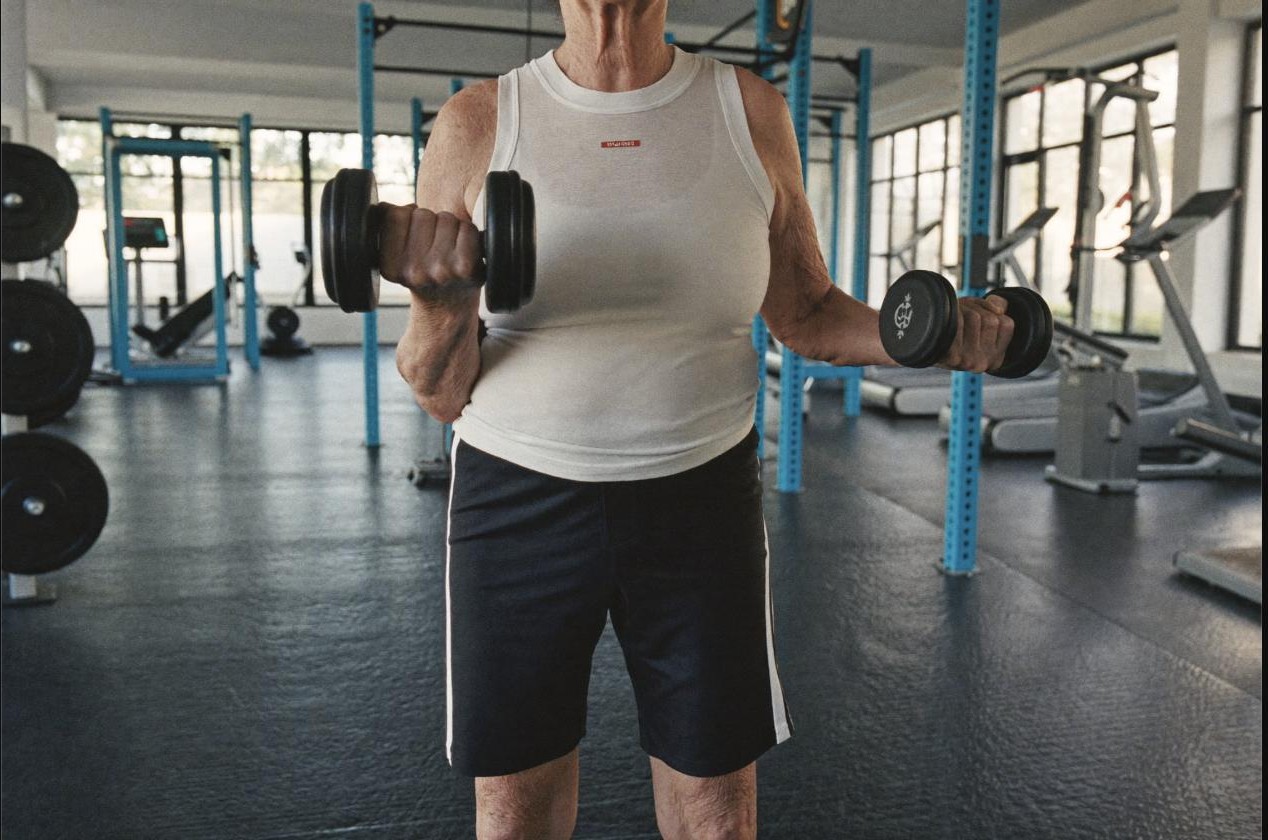
Research on resistance training prescriptions for sarcopenia points toward a specific, achievable structure: programs consisting of roughly two exercise sessions per week, covering both upper- and lower-body movements, performed with a relatively high degree of effort — not going through the motions with light weight, but training with genuine intensity relative to current capacity. This is a lower bar than many people assume; sarcopenia doesn't require hours in a gym to address, but it does require training with real effort, consistently, over time.
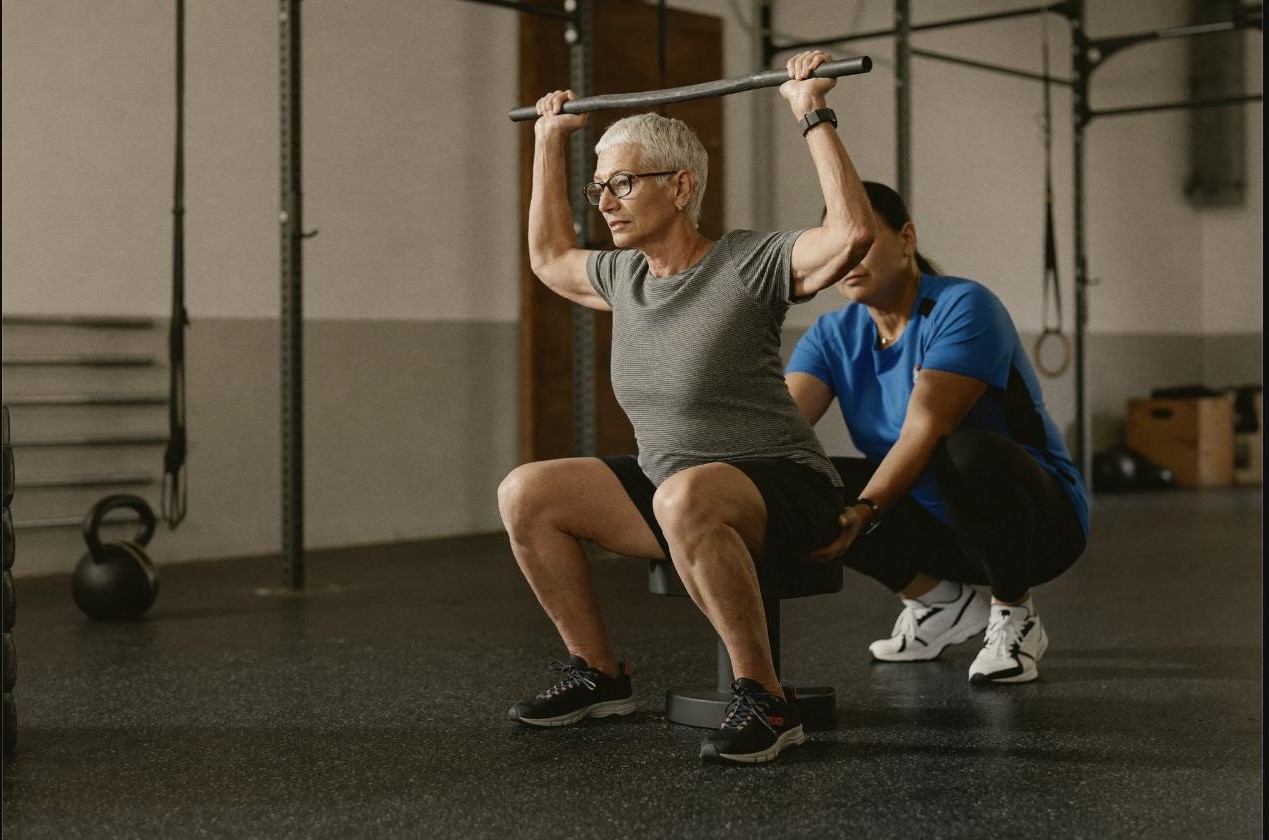
"Relatively high degree of effort" doesn't mean maximal or dangerous loading — it means training close enough to fatigue that the muscle receives an adequate stimulus to adapt, which for most untrained or previously sedentary older adults is a considerably lower absolute weight than they might assume, but a higher relative effort than the light, low-stimulus routines often recommended out of excessive caution. This is exactly where individualized programming matters: the right starting intensity depends on current strength, joint health, and training history, which is difficult to judge accurately without an assessment.
Sarcopenia's Broader Health Consequences
The stakes of untreated sarcopenia extend well beyond strength on its own. Reduced muscle mass and strength are directly linked to higher fall risk, and falls in older adults are a leading cause of fracture, hospitalization, and loss of independence. Muscle also plays a significant role in glucose metabolism, meaning declining muscle mass can contribute to worsening insulin sensitivity over time. And because muscle serves as a functional reserve during illness or surgery, patients entering a hospital stay with lower muscle mass generally face a harder recovery and a higher risk of complications than those with a stronger baseline. None of these outcomes are guaranteed, but they represent the compounding downstream risk that makes addressing sarcopenia early — rather than after a fall or hospitalization forces the issue — the more evidence-aligned approach.
You Don't Have to Wait Until It's a Problem
Because sarcopenia is diagnosed on a spectrum — "probable," then confirmed by additional criteria — waiting for a formal diagnosis before addressing it means waiting until strength loss is already clinically significant. Given that resistance training is protective at any stage, and that muscle mass itself is independently linked to lower all-cause mortality, the more useful framing isn't "do I have sarcopenia yet," but "am I doing anything to actively counteract the muscle loss that starts happening by default."
What About Nutrition?
Resistance training is the primary lever, but the research on sarcopenia interventions consistently treats adequate protein intake as a supporting factor rather than an optional extra. Muscle is protein turnover in equilibrium — training provides the stimulus to build it, but insufficient protein intake limits how much of that stimulus actually translates into retained or new tissue, particularly in older adults whose anabolic response to protein tends to be somewhat blunted compared to younger adults. This is one of the reasons combined resistance training and nutritional interventions tend to outperform either approach alone in the research on sarcopenia outcomes.
The Bottom Line
Age-related muscle loss isn't a passive process you simply endure — it's a specific, diagnosable condition with a well-supported, achievable intervention. Two structured resistance sessions a week, done with real effort, is enough to meaningfully change that trajectory according to the current evidence.
FAQ
What is sarcopenia?
Sarcopenia is a clinically defined skeletal muscle disorder involving progressive loss of muscle strength and mass, most common in older adults. The EWGSOP2 consensus identifies low muscle strength as the primary diagnostic criterion.
Can resistance training actually reverse sarcopenia?
Research consistently identifies resistance training as the most effective intervention for sarcopenia, with systematic reviews and meta-analyses reporting statistically significant improvements in muscle strength, mass, and physical performance.
How often do you need to train to address sarcopenia?
Research suggests resistance training programs of around two sessions per week, covering both upper- and lower-body exercises performed with meaningful effort, are an appropriate and effective approach.
Sources
- Resistance exercise as a treatment for sarcopenia: prescription and delivery. Age and Ageing, 51(2), 2022.
- The effect of resistance training on patients with secondary sarcopenia: a systematic review and meta-analysis. Scientific Reports, 2024.
Want a strength program built for your stage of life?
Book a performance assessment and get resistance training programmed around your actual strength and recovery capacity.
Book a Free Discovery Call